
Regulatory compliance in Singapore construction is defined as the mandatory adherence to all laws, codes, and statutory requirements governing how building projects are planned, executed, and closed out. For construction professionals and project managers, this means satisfying obligations set by the Building and Construction Authority (BCA), Ministry of Manpower (MOM), Accounting and Corporate Regulatory Authority (ACRA), Inland Revenue Authority of Singapore (IRAS), and the Personal Data Protection Commission (PDPC). Non-compliance carries severe consequences, including project shutdowns, financial penalties, and reputational damage. This regulatory compliance guide for Singapore construction professionals covers every critical obligation from incorporation through project delivery.

What are the key regulatory bodies governing Singapore construction compliance?
Five agencies define the compliance framework for construction firms operating in Singapore. Each controls a distinct domain, and failure in any one area creates cascading risk across the entire project.
- BCA (Building and Construction Authority): BCA administers the Building Control Act and enforces structural safety, fire safety, and accessibility standards. Every construction project requires BCA plan approval before works begin. The building codes in Singapore set the technical baseline that all structural and architectural submissions must meet.
- MOM (Ministry of Manpower): MOM regulates workplace safety under the Workplace Safety and Health Act (WSHA) and controls work pass issuance for foreign workers. Construction sites must appoint a WSH Officer and conduct documented risk assessments before works commence.
- ACRA (Accounting and Corporate Regulatory Authority): ACRA governs corporate registration, annual filings, and director duties. Every company operating on a Singapore construction project must maintain a registered company secretary and meet annual filing deadlines.
- IRAS (Inland Revenue Authority of Singapore): IRAS administers corporate income tax, GST, and withholding tax obligations. Construction firms must file Estimated Chargeable Income (ECI) and corporate tax returns on fixed statutory deadlines.
- PDPC (Personal Data Protection Commission): PDPC enforces the Personal Data Protection Act (PDPA). Construction projects collect personal data from workers, subcontractors, and clients, making PDPA compliance a direct operational requirement.
The Employment Act and WSHA sit alongside these agencies as foundational statutes. Understanding Singapore’s building regulations and the role of each body is the starting point for any compliance program.
What are the essential compliance requirements throughout the construction project lifecycle?
Compliance obligations begin the moment a company is incorporated and continue through every phase of project delivery. Missing any milestone creates legal exposure and operational disruption.
-
Company incorporation and secretarial appointment. A company secretary must be appointed within six months of incorporation under ACRA rules. This person maintains statutory registers, files annual returns, and tracks director obligations.
-
Pre-hiring statutory setup. Employers must activate CPF and MOM employer accounts immediately after incorporation. Pre-hiring right-to-work checks must be completed before any worker starts. Failure to verify work passes before employment begins triggers instant MOM penalties for illegal employment.
-
Employment contracts and MOM alignment. All employment contracts must comply with the Employment Act. Key Employment Terms (KETs) must be issued in writing to every employee within 14 days of their start date.
-
Monthly payroll compliance. CPF contributions are due by the 14th of each month for the prior month’s wages. Late payments incur a 1.5% monthly interest charge and possible prosecution with fines up to S$5,000. The Skills Development Levy must also be paid monthly alongside CPF.
-
Workplace Safety and Health Act (WSHA) requirements. Construction sites must conduct documented risk assessments before any hazardous activity. A qualified WSH Officer must be appointed for projects above the prescribed contract value threshold. The SCDF compliance requirements for fire safety must also be addressed during construction.
-
Annual corporate filings with ACRA. Private companies must hold their Annual General Meeting (AGM) within six months after the Financial Year End (FYE). The Annual Return (AR) must be filed within 30 days of the AGM. Missing these deadlines triggers late filing penalties starting at S$300.
-
IRAS tax filings. ECI must be filed within three months of FYE. The corporate tax return is due by November 30 each year. Construction firms with GST registration must also file quarterly GST returns.
-
PDPA annual review. The PDPA requires appointing a Data Protection Officer (DPO) and implementing data protection policies. PDPA non-compliance carries fines up to S$1 million. Construction projects routinely handle worker identification data, medical records, and subcontractor contracts, all of which fall under PDPA scope.
Pro Tip: Set calendar reminders 30 days before every statutory deadline. A single missed ACRA or IRAS filing can trigger penalties that compound quickly and flag your firm during tender evaluations.
How to create and manage a regulatory compliance checklist for Singapore construction projects
A compliance checklist is the operational backbone of any construction project’s regulatory program. Without one, obligations get missed, documentation becomes inconsistent, and audit readiness suffers.
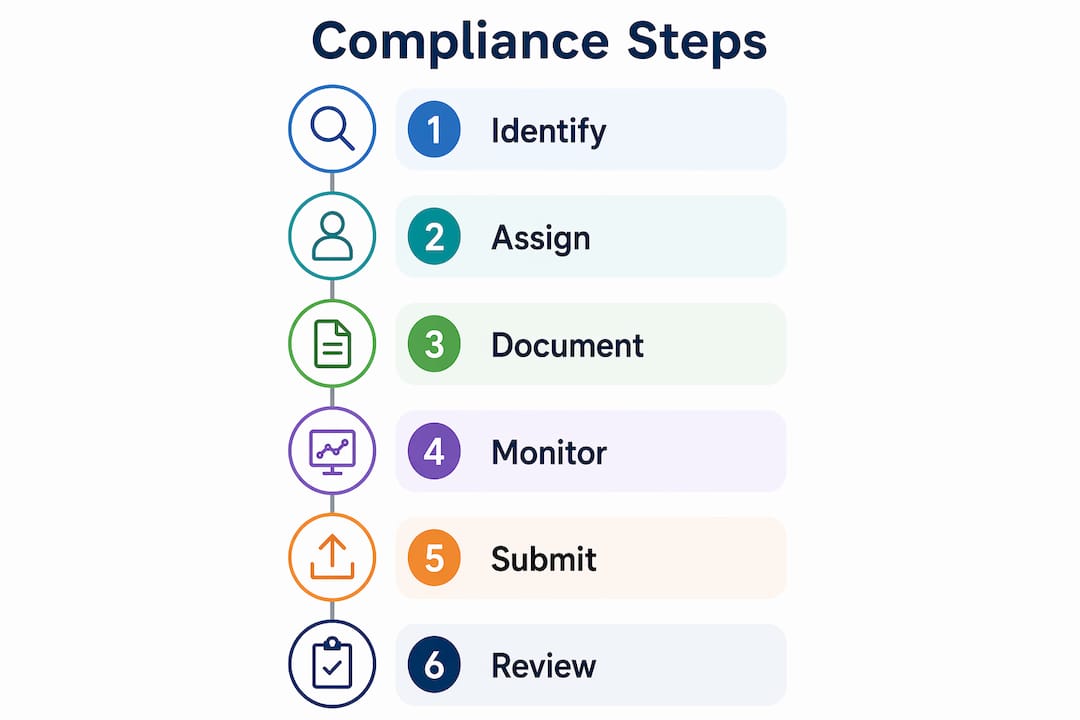
The table below outlines the core components of a Singapore construction compliance checklist:
| Compliance Area | Key Actions | Responsible Role | Submission Portal |
|---|---|---|---|
| BCA plan approval | Submit structural and architectural plans before works begin | QP (Qualified Person) | CORENET X |
| MOM work passes | Verify work pass validity for all foreign workers | HR / Project Manager | MOM WP Online |
| CPF contributions | Pay by the 14th of each month | Finance Manager | CPF e-Submit |
| ACRA annual filings | File AGM and Annual Return on schedule | Company Secretary | BizFile+ |
| IRAS tax returns | Submit ECI within 3 months of FYE; Form C by November 30 | Finance / Tax Agent | myTax Portal |
| PDPA compliance | Appoint DPO; conduct annual data protection review | Compliance Officer | PDPC Advisory |
| WSHA risk assessments | Document and review before each hazardous activity | WSH Officer | Internal records |
Each checklist item must include a deadline, the responsible person’s name, the relevant government portal, and a document reference number. Version control is non-negotiable. When a statutory change occurs, the checklist must be updated immediately and the previous version archived with a date stamp.
Integrating the checklist into your project management workflow prevents compliance from being treated as a separate administrative task. Assign checklist reviews as standing agenda items in monthly project meetings. Digital project management platforms that support task assignment and deadline tracking work well for this purpose.
Pro Tip: Present your compliance checklist to clients during project onboarding. Audit-ready documentation signals professionalism and reduces the due diligence burden on the client’s side, which shortens contract negotiation cycles.
Common compliance pitfalls and how to avoid them in Singapore construction projects
Most compliance failures in Singapore construction are not caused by ignorance of the law. They result from poor process discipline and inadequate documentation systems.
- Missing statutory deadlines. Late ACRA filings, overdue CPF payments, and missed IRAS submissions are the most common triggers for penalties. Each agency imposes its own penalty structure, and fines compound when multiple deadlines are missed in the same period.
- Neglecting pre-hiring checks. Employers who fail to verify work pass validity before a worker starts face immediate MOM enforcement action. This is one of the most frequently cited violations on Singapore construction sites.
- Incomplete statutory registers. ACRA requires companies to maintain registers of directors, shareholders, and charges. Missing or outdated registers create problems during audits and can delay project financing approvals.
- Ignoring WSHA protocols. WSHA violations carry fines up to S$500,000 plus potential imprisonment. A single workplace incident without documented risk assessments exposes the company and its directors to criminal liability.
- Underestimating PDPA obligations. Many construction firms collect worker biometric data, medical fitness certificates, and subcontractor financial records without a formal data protection policy in place. This creates direct PDPA exposure.
- Overlooking available grants. Enterprise Development Grant (EDG) and Productivity Solutions Grant (PSG) funding can offset compliance software and consultancy costs. Firms that miss these grants pay more for compliance than necessary.
Compliance failures in construction are rarely catastrophic on their own. They become catastrophic when they compound. A missed CPF payment leads to a penalty notice. That notice triggers a MOM audit. The audit uncovers an incomplete risk assessment register. The result is a project shutdown that costs ten times the original fine.
Documentation discipline is the single most effective preventive measure. Every site instruction, risk assessment, and statutory filing must be stored in a centralized, searchable system with access logs.
How does regulatory compliance create a competitive advantage for Singapore construction firms?
Viewing compliance as an infrastructure investment transforms it from a cost center into a business development tool. Construction firms with clean compliance records win more tenders, access better financing, and onboard clients faster.
Government procurement in Singapore requires bidders to demonstrate regulatory standing. A firm with documented WSHA records, current BCA registrations, and clean ACRA filings moves through pre-qualification faster than one that scrambles to assemble documents at tender time. ISO certifications and version-controlled documentation shorten procurement and tender approval cycles by demonstrating audit readiness to clients and regulators before they even ask.
Banks prioritize a company’s compliance record when approving loans or opening accounts. A clean track record facilitates smoother financial transactions and better loan terms. For construction firms managing large project cash flows, this translates directly into lower financing costs and faster drawdown approvals.
A spotless compliance record is not just a legal shield. It is a sales document. Every tender evaluation, every bank meeting, and every client onboarding conversation goes faster when your compliance history speaks before you do.
Building a culture of compliance also reduces internal friction. When site managers, finance teams, and HR staff all understand their statutory obligations, the firm spends less time on reactive firefighting and more time on project delivery.
Key Takeaways
Regulatory compliance in Singapore construction is a structured, deadline-driven obligation that protects firms from penalties, accelerates tender wins, and strengthens financing access when managed proactively.
| Point | Details |
|---|---|
| Five core regulatory bodies | BCA, MOM, ACRA, IRAS, and PDPC each govern distinct compliance domains for construction firms. |
| Statutory deadlines are fixed | AGM within 6 months of FYE, CPF by the 14th monthly, ECI within 3 months of FYE. |
| Penalties are severe | WSHA violations reach S$500,000; PDPA breaches up to S$1 million; ACRA late filings start at S$300. |
| Checklists prevent compounding failures | A version-controlled compliance checklist with named owners stops single missed deadlines from escalating. |
| Compliance drives competitive advantage | Clean compliance records shorten tender cycles, improve bank loan terms, and accelerate client onboarding. |
Compliance as a career-defining discipline: a practitioner’s view
Working with construction firms across Singapore, I have seen the same pattern repeat. A project manager treats compliance as something the company secretary handles. The company secretary treats it as something the finance team tracks. The finance team assumes the project manager filed the MOM paperwork. Nobody owns it, and the first audit reveals the gap.
The firms that avoid this are the ones that appoint a dedicated compliance lead at project kickoff. This does not require a full-time hire. A senior project manager with a structured compliance calendar and access to a specialized consultancy like Aectechnicalsg can cover the full obligation set. What matters is that one person has accountability and the authority to escalate when deadlines approach.
I have also seen firms treat compliance as a one-time setup task. They activate CPF accounts, file the first Annual Return, and then assume the system runs itself. It does not. Statutory requirements change. MOM updates work pass conditions. IRAS adjusts filing formats. PDPC issues new advisory guidelines. A compliance program that is not reviewed quarterly becomes outdated within a year.
The construction firms I respect most treat their compliance checklist for Singapore projects the same way they treat their project schedule. It is a living document, reviewed regularly, owned by a named individual, and updated whenever the regulatory environment shifts. That discipline is what separates firms that win repeat government contracts from those that spend their energy responding to penalty notices.
— Aman
Aectechnicalsg: technical advisory for Singapore construction compliance
Construction compliance in Singapore requires more than a checklist. It requires technical expertise across BCA submissions, WSHA documentation, and authority approvals that most project teams cannot maintain in-house.
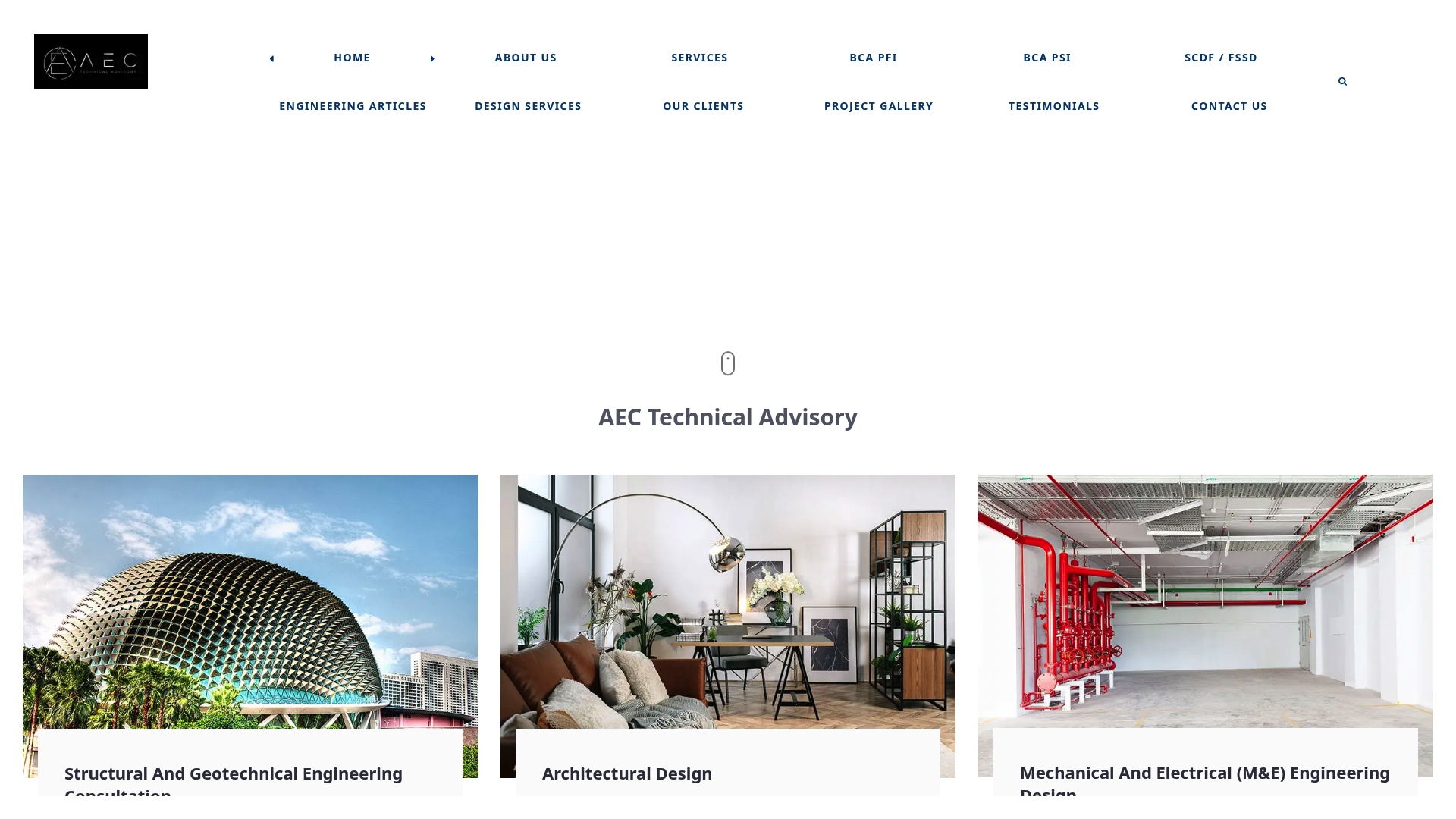
Aectechnicalsg provides engineering consultancy and regulatory advisory services specifically for Singapore construction and infrastructure projects. The team supports authority submissions to BCA, SCDF, URA, LTA, PUB, and NEA, covering the full approval workflow from design stage through project completion. For firms that need structured safety integration from the earliest design phase, Aectechnicalsg’s design for safety consulting embeds compliance into the project before construction begins. The construction compliance checklist service gives project managers a structured, audit-ready documentation framework tailored to Singapore’s regulatory requirements.
FAQ
What are the main regulatory bodies for Singapore construction compliance?
The five primary bodies are BCA, MOM, ACRA, IRAS, and PDPC. Each governs a distinct compliance domain covering structural safety, workplace regulations, corporate filings, tax obligations, and data protection.
What penalties apply for non-compliance in Singapore construction?
WSHA violations carry fines up to S$500,000 plus possible imprisonment. PDPA breaches reach up to S$1 million. ACRA late filing penalties start at S$300 and escalate with continued non-compliance.
When must CPF contributions be paid for construction workers?
CPF contributions must be paid by the 14th of each month for the prior month’s wages. Late payments incur a 1.5% monthly interest charge and potential prosecution with fines up to S$5,000.
How does a compliance checklist help construction project managers?
A compliance checklist assigns deadlines, responsible owners, and document references to every statutory obligation. It prevents missed filings, supports audit readiness, and demonstrates regulatory standing during tender evaluations.
How does compliance improve a construction firm’s access to financing?
Banks treat a company’s compliance record as a primary criterion when approving business loans and banking facilities. A clean statutory track record produces better loan terms and faster account approvals for construction firms managing large project cash flows.