Selecting the wrong engineering consultancy at the outset of a Singapore building project can trigger regulatory submission failures, costly redesigns, and approval delays that cascade across the entire project timeline. Singapore’s built environment operates under one of the most layered regulatory frameworks in Asia, with mandatory submissions to authorities including BCA, URA, SCDF, PUB, LTA, JTC, and NEA, each demanding distinct technical expertise. Singapore’s construction sector faces sustained demand for qualified engineers alongside ongoing regulatory evolution. This guide defines the main consultancy types, compares their roles, and provides a structured decision path for project developers and construction firms.
Table of Contents
- Key criteria for choosing an engineering consultancy in Singapore
- Major types of engineering consultancy services explained
- Comparison of consultancy types for common Singapore project needs
- How to match consultancy type to your project’s regulatory path
- Why the right mix of consultancy is the hidden driver of project success
- Connect with the right engineering consultancy partner in Singapore
- Frequently asked questions
Key Takeaways
| Point | Details |
|---|---|
| Clarify project criteria | Define your regulatory, technical, and project complexity needs before choosing consultancy types. |
| Map consultancy to scope | Match each consultancy type to your project’s required submissions, assessments, or reviews. |
| Use a comparison matrix | Refer to a side-by-side table to quickly see the best fit for your project’s challenges. |
| Right mix accelerates success | Combining specialist input early can minimize delays and drive smoother authority approvals. |
Key criteria for choosing an engineering consultancy in Singapore
With the regulatory and technical stakes established, decision-makers must first clarify their selection criteria before evaluating any consultancy candidate.
The most consequential question is whether the consultancy holds the regulatory standing required for your project type. Singapore’s BCA and associated authorities mandate that specific categories of work be endorsed by Registered Professional Engineers (PEs) with the appropriate discipline designation. Engaging a consultancy without the correct PE registration effectively voids its submission capacity for that scope. This is not a procedural formality. It directly determines whether your application proceeds or stalls.
Beyond registration, project developers should evaluate the following core criteria:
- Specialization alignment: Confirm the consultancy’s declared discipline matches your project scope. Structural, geotechnical, mechanical and electrical (M&E), façade, and safety consultancies each operate in distinct technical lanes. Misalignment at the point of engagement creates authority submission gaps.
- Regulatory track record: Review whether the consultancy has successfully navigated submissions to the specific authorities your project requires. A firm experienced in JTC industrial submissions may not carry comparable strength for URA conservation area approvals.
- Project scale capacity: A consultancy’s team size, PE headcount, and concurrent project load directly affect delivery quality. Firms stretched thin across multiple large projects may compromise review depth.
- Submission sequencing knowledge: Many consultancies can design, but fewer can manage the sequencing of authority submissions strategically. This skill significantly reduces rejection rates.
- Portfolio relevance: Matching your project typology (residential, industrial, mixed-use, infrastructure) to the consultancy’s past work reduces onboarding risk and signals faster execution.
With construction demand forecasted at S$47 to 53 billion in 2025, the market for competent consultancies is competitive. Securing the right firm early is a strategic move, not just a procurement task.
Ensuring building safety and compliance requires consultancies who understand not just technical outputs but the full accountability chain that Singapore regulations impose on every declared professional.
Pro Tip: Request documented tender win rates and BCA submission approval records from prospective consultancies. These figures reveal regulatory competence far more accurately than general capability statements or company brochures.
Major types of engineering consultancy services explained
Once selection criteria are clear, the next step is identifying which consultancy type best matches the required expertise. Singapore’s built environment recognizes several distinct disciplines, each with defined mandates, deliverables, and authority submission obligations.
Structural engineering consultancy covers the design and analysis of load-bearing systems in buildings and infrastructure. Deliverables include structural calculations, drawings, and PE-endorsed submissions to BCA. Structural PEs hold statutory responsibility for the safety and stability of the permanent structure. This consultancy type is mandatory for virtually all new building works and significant additions or alterations.
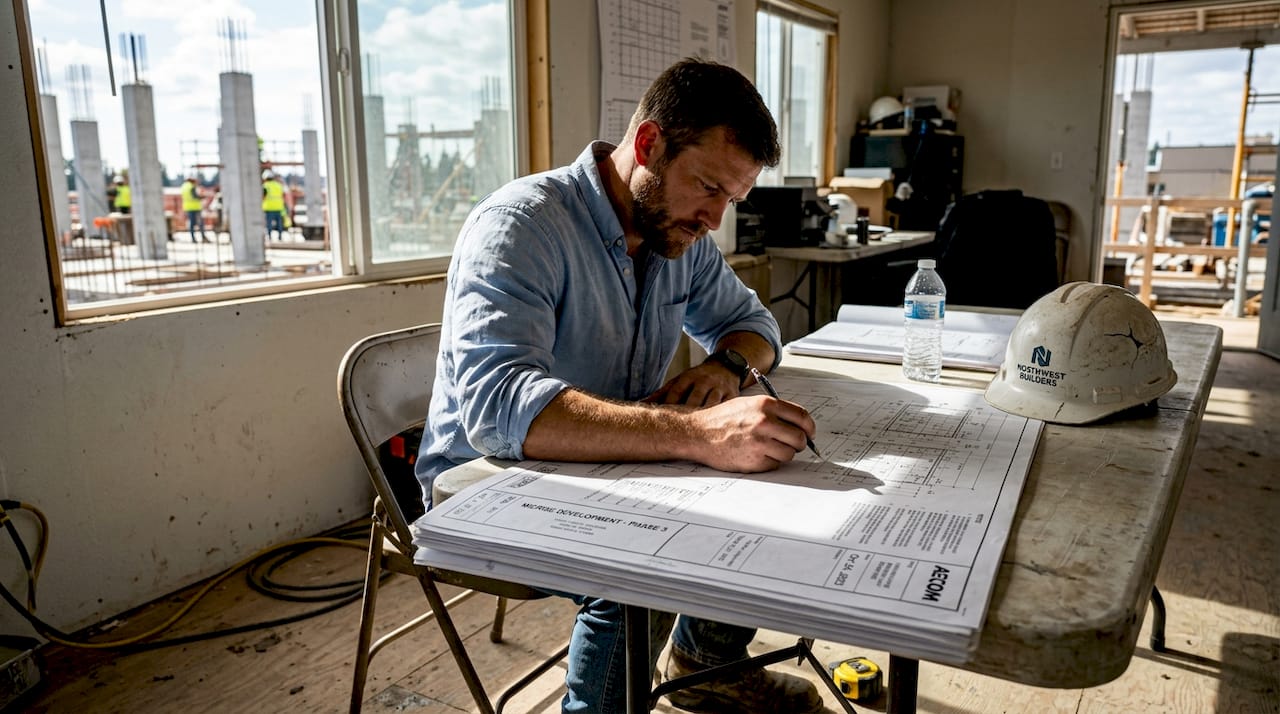
Civil engineering consultancy handles site formation, drainage, road infrastructure, earthworks, and utility coordination. Civil engineering consultancy services are typically required for projects involving significant ground disturbance, infrastructure connections, or public road interfaces. Submissions may route to LTA, PUB, or NParks depending on scope.
Mechanical and electrical (M&E) consultancy covers the design and coordination of building services including ACMV (air conditioning and mechanical ventilation), electrical systems, fire protection, plumbing, and sanitation. M&E consultancy is required for SCDF fire protection submissions, BCA green building assessments under the Green Mark scheme, and PUB water and sewerage approvals.
Geotechnical engineering consultancy addresses subsurface conditions, foundation design, and earth-retaining structures. Geotechnical consultancy is essential for deep excavation projects, piling design, and sites with complex ground conditions. BCA requires geotechnical PE endorsement for submissions involving earth-retaining structures above specified thresholds.
Façade engineering consultancy evaluates building envelopes for structural performance, wind loading, water tightness, and material compliance. This discipline is increasingly required for high-rise developments and projects involving unitized curtain wall systems.
Safety consultancy (Design for Safety) ensures compliance with Singapore’s Design for Safety (DfS) regulations, which are mandatory for major construction projects. Deliverables include DfS registers, hazard logs, and PE declarations.
Singapore annually requires over 1,000 architects and engineers to meet built environment demands, reflecting the sheer breadth of technical specialization the market requires.
| Consultancy Type | Core Authority | Key Deliverables | Typical Trigger |
|---|---|---|---|
| Structural | BCA | Structural drawings, PE submission | New build, A&A works |
| Civil | LTA, PUB | Civil design, drainage, earthworks | Site formation, roads |
| M&E | SCDF, BCA, PUB | M&E drawings, fire protection plans | All occupied buildings |
| Geotechnical | BCA | Soil investigation, foundation design | Excavation, piling |
| Façade | BCA | Façade analysis, wind load reports | High-rise, curtain wall |
| Safety (DfS) | MOM, BCA | DfS register, hazard assessments | Major construction projects |
Pro Tip: Engage a consultancy that can field hybrid teams across structural and civil disciplines. On projects with complex site formation and superstructure requirements, a single coordinated team reduces submission conflicts and accelerates regulatory approvals.
Comparison of consultancy types for common Singapore project needs
With definitions in hand, comparing consultancy services side-by-side helps match specific project needs to the right technical offering.
No two building projects in Singapore generate identical regulatory obligations. A mixed-use development in a URA conservation area carries substantially different submission requirements than a JTC industrial facility or a private residential project in a reclaimed land zone. This is why a matrix approach to consultancy selection yields better outcomes than defaulting to a familiar firm regardless of project fit.
| Project Task | Structural | Civil | M&E | Geotechnical | Façade | Safety |
|---|---|---|---|---|---|---|
| Superstructure design | Primary | Supporting | No | No | Supporting | No |
| Foundation and piling | Supporting | No | No | Primary | No | No |
| BCA structural submission | Primary | No | No | Supporting | No | No |
| Deep excavation | Supporting | Primary | No | Primary | No | Supporting |
| Fire protection design | No | No | Primary | No | No | Supporting |
| Curtain wall / façade | No | No | No | No | Primary | Supporting |
| Green Mark submission | Supporting | No | Primary | No | Supporting | No |
| DfS compliance | No | No | No | No | No | Primary |
| Drainage and earthworks | No | Primary | No | Supporting | No | No |
Several patterns stand out from this comparison. Geotechnical consultancy is often a supporting requirement across multiple disciplines. Façade consultancy is highly specialized, activated mainly by project typology rather than regulatory mandate on all projects. Safety consultancy, under Singapore’s DfS framework, activates at a project gross floor area (GFA) threshold and construction value trigger.
For regulatory submissions where scoring matters, quality-weighted tenders award the highest-quality bids rather than lowest-fee submissions. This signals that technical depth and regulatory competence command a premium, and selecting consultancies purely on cost creates downstream risk.
Best use cases by consultancy type:
- Structural: Best for new builds, conserved shophouses with structural interventions, and any project requiring BCA building plan approval
- Civil: Best for industrial estate developments, infrastructure upgrades, and projects requiring LTA or PUB road or drainage approvals
- M&E: Best for commercial fit-outs, all inhabited buildings, and projects requiring SCDF fire certificate or PUB licensed plumber endorsements
- Geotechnical: Best for projects adjacent to MRT tunnels, on reclaimed land, or involving basements and deep excavations
- Façade: Best for high-rise residential and commercial towers with complex envelope systems
- Safety: Best for large-scale construction projects subject to the Design for Safety regulations under Singapore’s Workplace Safety and Health Act
How to match consultancy type to your project’s regulatory path
Finally, tying together comparisons and consultancy types with actionable mapping guidance provides the clearest decision framework for developers and construction firms.
Mapping consultancy engagement to a project’s regulatory path is not a one-time exercise performed at the project kickoff. It is an ongoing alignment process that adjusts as design progresses and authority feedback is received. That said, establishing a clear sequence from the outset dramatically reduces the likelihood of avoidable submission failures.
Follow this step-by-step process:
-
Confirm site zoning and development parameters. Before any design work begins, establish the URA planning envelope. This reveals immediate consultancy needs, including whether a traffic impact study (civil), an environmental baseline study, or conservation structure assessment is required.
-
Commission geotechnical investigation early. Subsurface data informs structural and civil design assumptions. Engaging geotechnical site assessment at the pre-design stage prevents costly structural redesigns triggered by unexpected ground conditions discovered mid-project.
-
Appoint your structural PE before schematic design is fixed. Structural assumptions locked into schematic design by architects without PE input regularly require expensive revisions. The structural consultancy should influence column grids, transfer plate locations, and floor-to-floor heights from the outset.
-
Sequence M&E consultancy alongside architectural design, not after. ACMV plantroom sizing, electrical room placements, and riser shaft allocations cannot be retrofitted into a completed architectural layout without significant cost. M&E input at design development stage avoids this.
-
Trigger façade and safety consultancies at detailed design. Façade engineering input is most valuable when envelope materials and system types are being finalized. Safety (DfS) consultancy should be engaged before construction documentation is completed so that hazard register obligations are fully embedded.
-
Coordinate all PE endorsement submissions before construction commences. PE endorsement across structural, civil, geotechnical, and M&E disciplines must be lodged with relevant authorities before site works commence. Staggered endorsements without a coordinated submission calendar create sequential delays.
Common pitfalls that disrupt this sequence include: appointing M&E consultants after architectural drawings have been issued for tender, engaging geotechnical firms only after piling contractors have been appointed, and delaying DfS registration until construction is underway.
“Specialist input during authority submissions and site supervision is not optional under Singapore’s regulatory framework. Projects that require specialist input from the outset consistently demonstrate shorter approval timelines and fewer enforcement issues across the project lifecycle.”
Pro Tip: Build a regulatory submission calendar at the project inception stage. Map each authority, required endorsement type, expected submission date, and responsible consultancy. This single document eliminates the most common cause of project delays: undefined submission ownership.
Why the right mix of consultancy is the hidden driver of project success
The technical content above is clear on what each consultancy type does. What it cannot fully convey is how the sequencing and combination of consultancy disciplines creates a compounding effect on project outcomes.
A common misconception among project developers is that all engineering consultancies are functionally interchangeable, that selecting a large firm with broad capability eliminates the need for specialist engagement. This assumption repeatedly generates costly outcomes. A well-resourced structural firm does not substitute for a dedicated geotechnical PE on a reclaimed land site. A capable M&E designer cannot fulfill DfS obligations for a major construction project.
The more instructive lesson from Singapore projects is that a deliberate layering of specialist input, properly sequenced and coordinated, converts regulatory obligations from project bottlenecks into completion accelerators. Projects where structural and M&E consultancies engage in early coordination consistently avoid the plantroom relocation and structural penetration conflicts that plague projects where these disciplines work in isolation. These conflicts, when discovered during construction documentation, routinely add six to twelve weeks to project programs.
Investing in civil engineering expertise alongside structural and M&E planning from project inception represents a higher front-end cost. But it is the difference between a regulatory path that flows and one that stalls repeatedly at submission review.
Connect with the right engineering consultancy partner in Singapore
Navigating Singapore’s multi-authority regulatory environment requires more than general engineering capability. It demands a consultancy partner with demonstrated technical specialization, active PE registrations, and a clear understanding of submission processes across BCA, SCDF, LTA, PUB, JTC, URA, and NEA.
AECTechnicalSG provides structural, civil, M&E, geotechnical, and safety consultancy services tailored to Singapore project developers and construction firms. The team handles PE endorsement and authority submissions across multiple disciplines, reducing submission friction and improving approval timelines. Whether your project involves deep excavation, complex M&E systems, or high-rise façades, the firm’s civil engineering experts and multidisciplinary teams are equipped to support your regulatory path from site investigation through project completion. Review the M&E workflow guide to understand how integrated coordination accelerates compliance delivery.
Frequently asked questions
What are the main types of engineering consultancy for Singapore building projects?
The main types are structural, civil, M&E, geotechnical, façade, and safety consultancy, each covering distinct technical scopes mandated by Singapore’s varied compliance needs across different authorities.
When is a Professional Engineer (PE) endorsement required for project submissions?
PE endorsement is required for structural, civil, geotechnical, and certain M&E submissions to BCA, SCDF, PUB, and LTA, as PE endorsement is often mandatory before any authority will process a building plan application.
How do I evaluate if a consultancy is qualified for my project?
Verify that the consultancy holds the relevant PE registration, has completed projects of comparable typology and scale, and demonstrates regulatory expertise specific to the authorities your project requires.
Is it better to engage multiple specialized consultancies or an integrated team?
An integrated team streamlines coordination and reduces submission conflicts, but complex projects often require dedicated specialists; hybrid teams that combine both approaches typically deliver the best regulatory outcomes.
How soon in the project should I engage an engineering consultancy?
Engage before schematic design begins. Early specialist engagement from site investigation through design development consistently reduces approval bottlenecks and avoids structural or compliance conflicts that are expensive to resolve later.
Recommended
- Professional Civil Engineering Services in Singapore – AEC Technical Advisory Singapore Engineering Consultancy
- Streamline M&E engineering workflow in Singapore: full guide
- Streamline Singapore’s structural design process for fast approval
- Understanding The Role Of Professional Engineers In Ensuring Building Safety And Compliance In Singapore – AEC Technical Advisory Singapore Engineering Consultancy